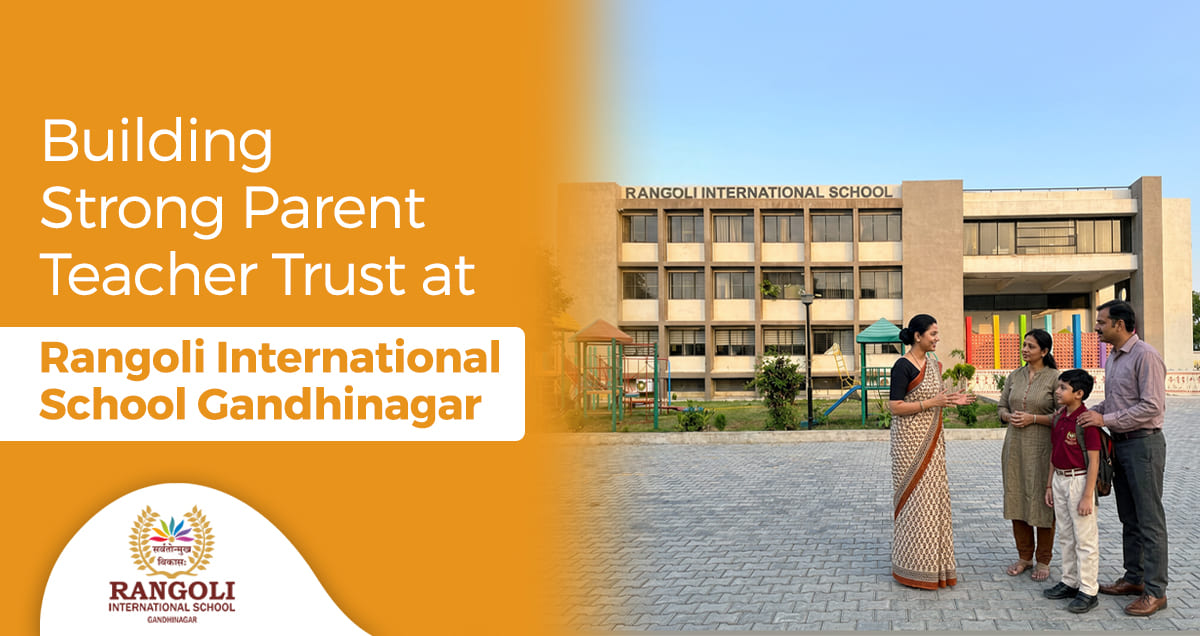
The biggest influence on a child’s success isn’t just the school or the parents, it’s how well they work together.
A child may spend hours in the classroom and the rest of the day at home, but the real magic happens when these two worlds stay connected. When parents and teachers communicate openly, trust each other, and share the same goal, children feel more supported, confident, and motivated to learn.
That’s why building a strong parent-teacher partnership is just as important as choosing the right school. Here’s how Rangoli International School Gandhinagar nurtures this relationship to help every student thrive.
Why Parent-Teacher Trust Matters
Children perform better when they know the important people in their lives are working together.
A trusting relationship between parents and teachers creates:
- Consistent guidance at home and school
- Better emotional support for students
- Early identification of challenges
- Greater confidence and motivation in children
Trust allows everyone to focus on what truly matters, the child’s overall growth.
The Importance of Parent-Teacher Communication
The importance of parent teacher communication goes far beyond discussing academic performance.
Regular communication helps parents understand:
- Their child’s strengths and interests
- Areas where additional support may be needed
- Classroom expectations and learning goals
- Social and emotional development
Likewise, parents can share valuable insights about their child’s learning style, behaviour, or any changes at home that may affect their school experience.
When communication becomes a two-way conversation rather than a one-time interaction, children receive the support they need to flourish.
Creating Transparent Communication in Schools
One of the biggest factors that builds trust is openness.
Transparent communication in schools means keeping parents informed, not just when problems arise, but throughout the child’s learning journey.
This includes:
- Regular academic updates
- Parent-teacher meetings
- Classroom activities and school events
- Progress reports and constructive feedback
- Open channels for addressing concerns
When schools communicate honestly and consistently, parents feel more involved and confident in their child’s education.
The Role of Parents in Student Success
Education doesn’t stop when the school day ends.
The role of parents in Student Success is equally important because children often mirror the attitude and encouragement they receive at home.
Parents can support learning by:
- Showing interest in daily school experiences
- Encouraging reading and curiosity
- Maintaining healthy routines
- Celebrating effort, not just results
- Staying connected with teachers
Even small conversations about school each day can make children feel supported and motivated.
Teachers and Parents: A Shared Team
Successful education isn’t about parents or teachers working separately, it’s about working together.
Teachers bring professional expertise, while parents understand their child’s personality, habits, and emotional needs better than anyone else.
When these perspectives come together, it becomes easier to:
- Identify learning gaps early
- Build confidence in students
- Address behavioural concerns constructively
- Celebrate achievements together
This collaborative approach creates a positive learning experience for every child.
Building Trust Through Consistency
Trust isn’t built during one meeting, it develops through consistent actions.
Schools strengthen relationships by:
- Listening to parent feedback
- Being approachable and responsive
- Sharing regular updates
- Maintaining transparency
- Celebrating student milestones together
Similarly, parents contribute by maintaining open communication, participating in school initiatives, and working alongside educators toward common goals.
The Rangoli International School Approach
As a leading CBSE school in Gandhinagar, Rangoli International School Gandhinagar believes that strong partnerships between parents and teachers are essential for a child’s holistic development.
The school encourages meaningful engagement through:
- Regular parent-teacher interactions
- Open communication channels
- Collaborative discussions about student progress
- School events that strengthen community involvement
- A supportive environment where every child receives individual attention
By fostering trust and collaboration, the school ensures that students receive consistent encouragement both inside and outside the classroom.
A Partnership That Shapes the Future
Children feel more secure when they see parents and teachers supporting one another.
They become more confident, participate more actively, and approach challenges with a positive mindset.
This partnership not only improves academic outcomes but also nurtures emotional well-being, responsibility, and resilience, qualities that prepare students for life beyond school.
Conclusion
Strong parent-teacher relationships are not built overnight, they are built through trust, communication, and a shared commitment to every child’s growth.
The importance of parent teacher communication lies in creating an environment where children feel understood, supported, and encouraged to achieve their full potential.
At Rangoli International School Gandhinagar, this partnership is at the heart of the learning experience, ensuring that every child grows with confidence, curiosity, and the support of both school and home.
Because when parents and teachers move forward together, children move forward with them.
FAQs
1. How often should parents communicate with teachers?
Regular communication is beneficial, but it doesn’t always have to be formal. Staying connected whenever needed helps address concerns early and supports consistent student development.
2. What should parents discuss during parent-teacher meetings?
Apart from academics, parents can discuss their child’s behaviour, interests, emotional well-being, classroom participation, and overall progress.
3. How can working parents stay involved in their child’s education?
By attending important school meetings when possible, staying connected through school communication channels, and regularly discussing school experiences at home.
4. Why is trust between parents and teachers important for younger students?
Young children thrive when they receive consistent guidance from both home and school, helping them feel secure and confident in their learning environment.
5. Can parent involvement improve a child’s confidence?
Yes. When children see parents taking an active interest in their education, they often feel more motivated, supported, and confident in both academics and extracurricular activities.